A printable enclosure
The case holds the display, supports the sensor assembly and provides openings for airflow. Printed parts make the physical design part of the build.

A 21CNCStudio project
An air-quality monitor, from the workbench to your home.
I'm Volodymyr Papush, the engineer and maker behind 21CNCStudio. I created Aura to bring air-quality readings, a touchscreen and local connectivity into a device you can build yourself.

01 / The starting point
Aura started with a question about the air around me. I wanted to see measurements in the room itself, without reaching for a phone every time.
My work at 21CNCStudio already involved designing physical objects, preparing digital files and building them. With Aura, I brought electronics and firmware into that process alongside the printed enclosure.
The first version required soldering. I revised the layout and connections as the project developed, and shared the build through MakerWorld. Feedback from other makers became part of the next iterations.
02 / The engineering
A working sensor was one part of the job. I also had to make room for the boards and cables, let air reach the sensors and arrange the readings on a screen.
I developed the enclosure, electronics and interface together, checking how each change affected the build and everyday use.
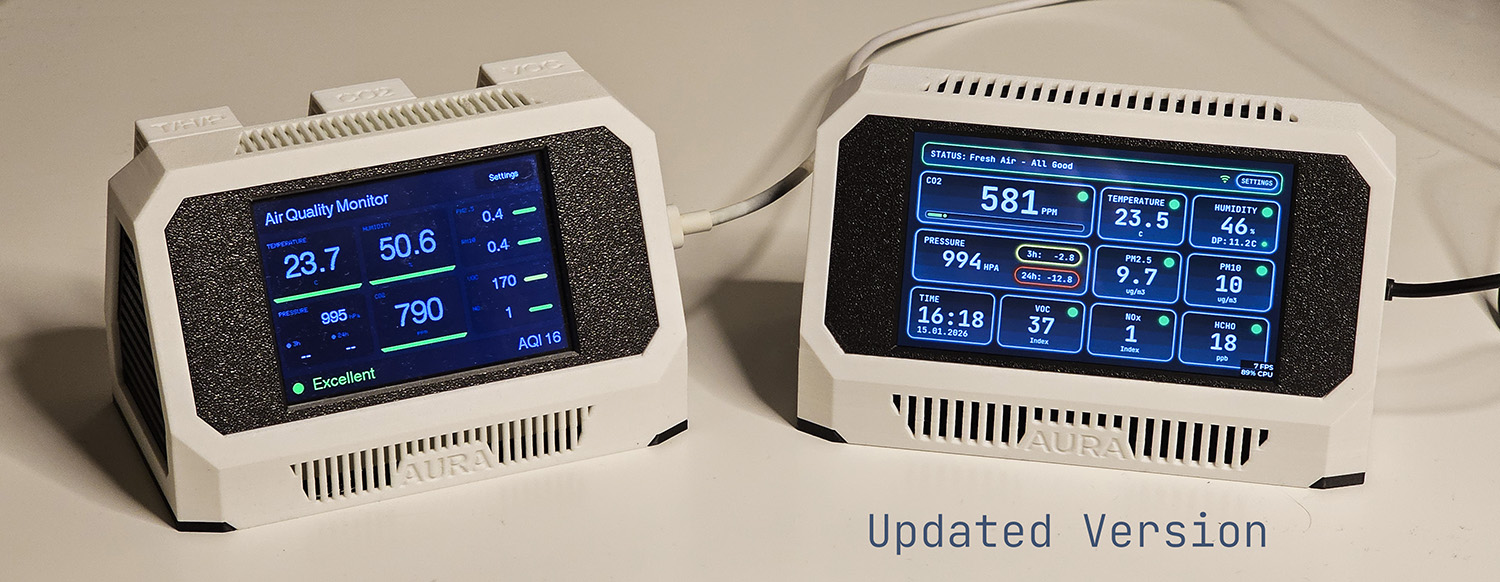
The case holds the display, supports the sensor assembly and provides openings for airflow. Printed parts make the physical design part of the build.
The touchscreen brings measurements and settings onto the device. The photographs below show earlier dashboard and settings layouts.
Aura runs locally, with a web dashboard and MQTT support for Home Assistant. You can read measurements on the device without a cloud subscription.


03 / Aura today
Aura AQ now has 4.3-inch and 7-inch touchscreen builds. Builders source the components and printed parts, then assemble the device using the project documentation.
On the dedicated Aura AQ website, I maintain the current hardware details, build resources and firmware information.
Check the current component list before ordering parts. Aura is a DIY monitoring project; optional gas sensors do not replace certified safety alarms.
The maker behind Aura
I run 21CNCStudio, where I design projects for laser cutting and 3D printing. Aura extends that work into a connected device, with its own enclosure, firmware and interface.
I continue to develop Aura and share its progress, documentation and source code. You can explore my other work through 21CNCStudio or follow the technical project on GitHub.